

Progress
Since 2011 British business has been on a journey to achieve gender balance through voluntary, business-led action and Government support. Our latest report findings, published in February 2026, show:
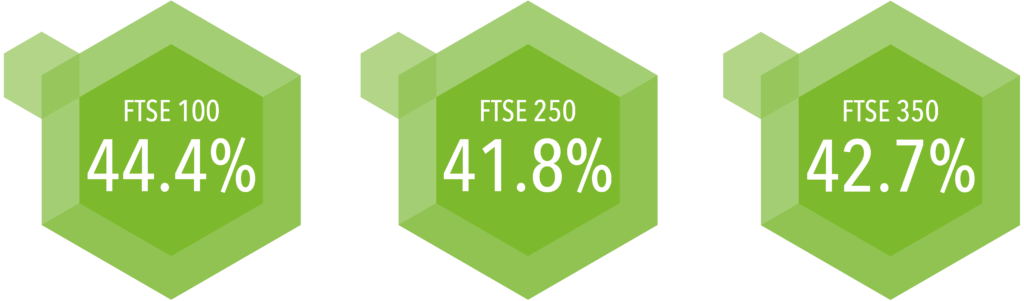
- A stabilisation in the drive to increase the number of women at the highest level of British business, as FTSE 350 companies report a year-on-year uplift in women on Boards (43%) and in Leadership roles (36%)
- There is a significant gap however in the number of women holding executive board roles at about one in six, compared with those in non-executive board roles which are now at parity
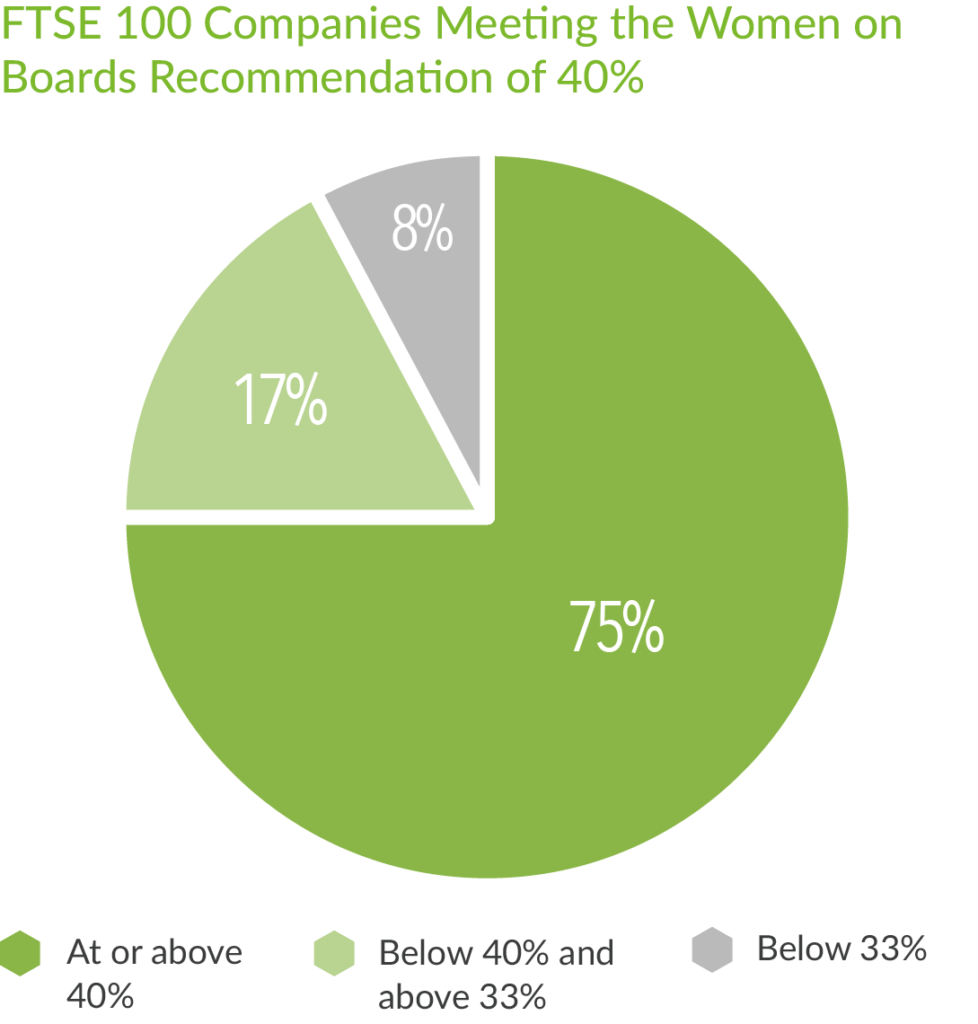
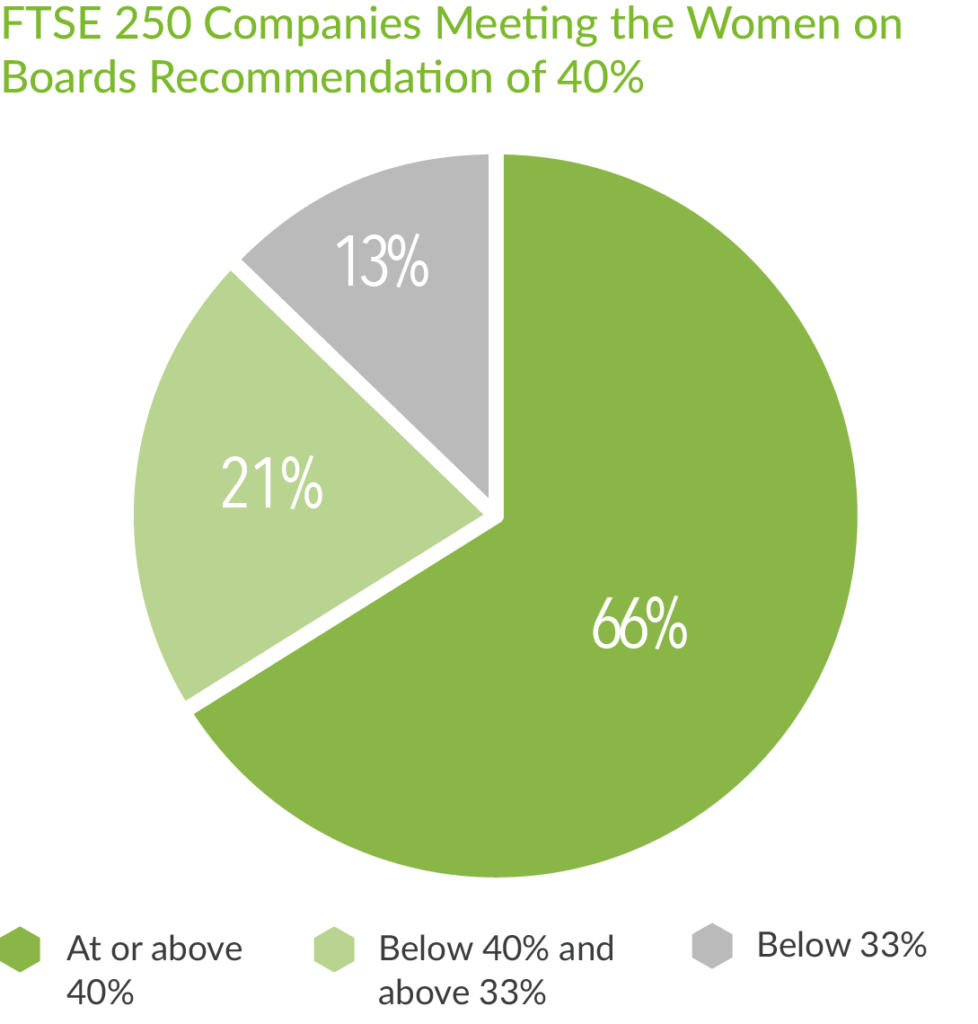
- 88% of FTSE 350 companies have achieved or are within reach of the 40% women on boards target with 68% already at 40%
- The recommendation of a woman in one of the Four Key Roles has made positive progress. 67% of FTSE 350 companies now have at least 1 woman in a Key Role; 61% of Senior Independent Director roles in the FTSE 350 are occupied by women, significantly increasing from 34% in 2021
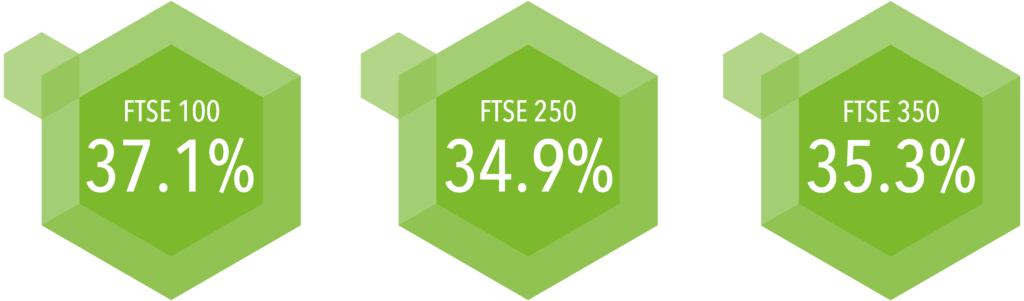
- Gender diversity at the top of the UK’s biggest private businesses is keeping pace with the largest public listed companies and is in lockstep with the FTSE 100 with women in Leadership reaching 37%
The UK is a world leader for women on Boards and is second only to France in the G7 international rankings, just behind France and ahead of Canada – testament to the power and impact of the UK’s unique voluntary approach.
Women on Boards
The FTSE 350 met the 40% Women on Boards target 2 years ahead of deadline. Since then, British business have made further gains, evidence there is room for more progress still. The appointment rate has declined slightly from 2024 (now 42% vs 46%), indicating that we cannot lose focus.
Women in Leadership
The FTSE 350 continue to make steady progress with women holding 35.9% of leadership roles (defined as the Executive Committee and their Direct Reports). Yet the appointment rate for women in FTSE 350 companies is 39%, meaning more than six in every ten available roles in the year went to men. This is difficult to comprehend when there is no shortage of capable women eager and ready to step into leadership roles.
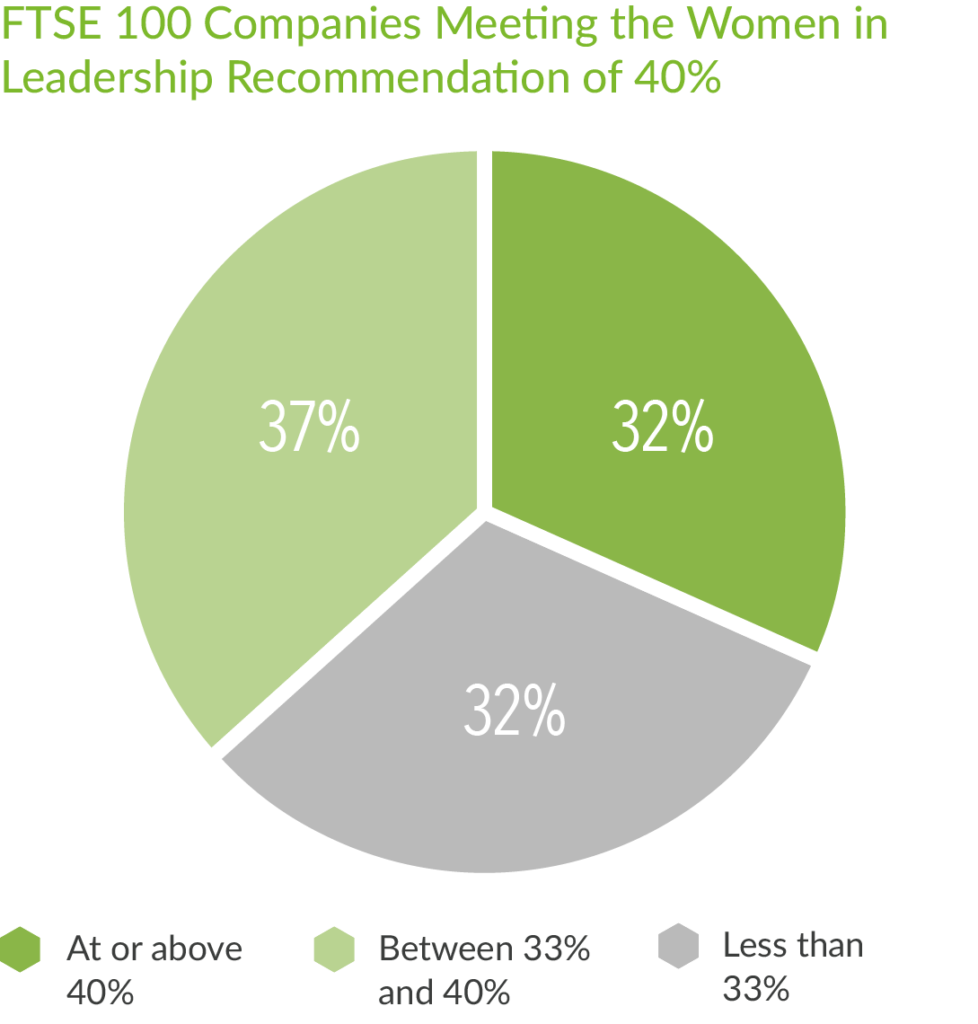
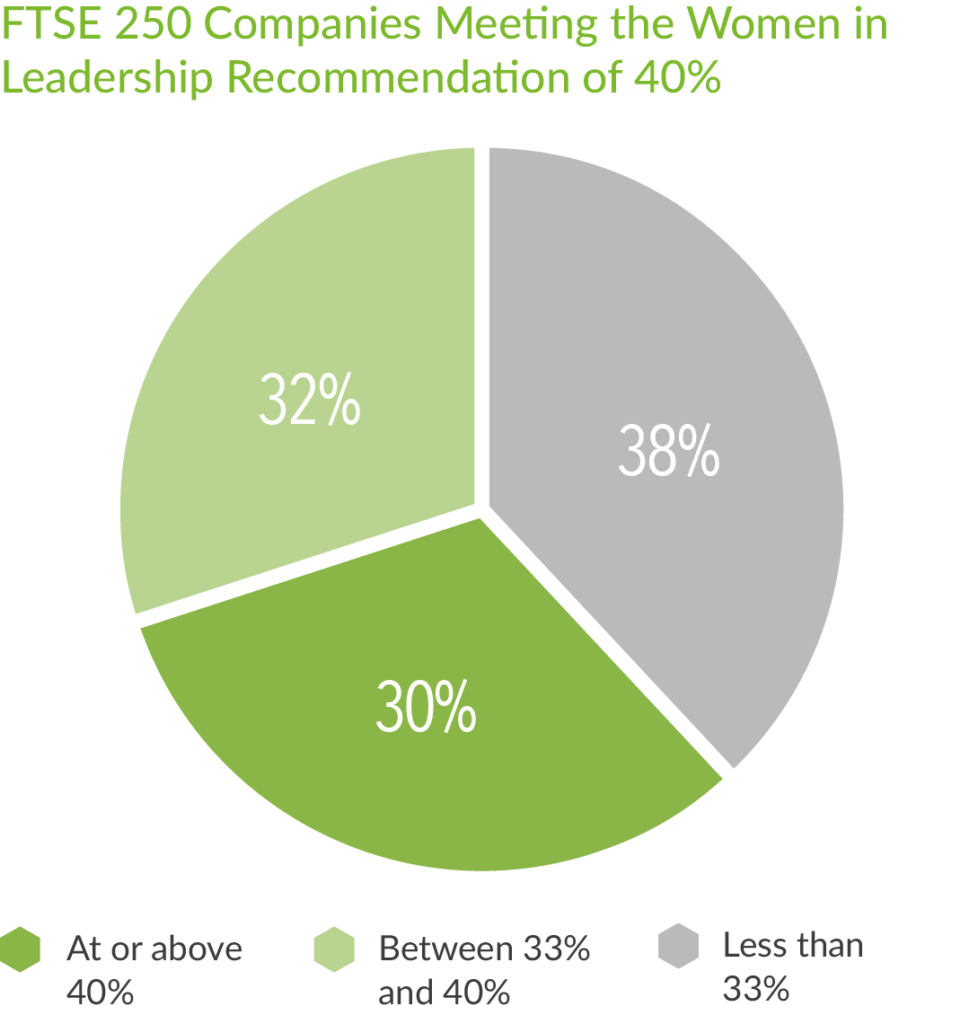
The Four Key Roles
Along with targets to achieve gender balance, progress for women into the very top jobs is another important measure of success. Recommendation 2 requests each FTSE 350 company to appoint a woman into at least one of the four key roles; Chair, Senior Independent Director, CEO and Finance Director. Focus on the UK’s biggest and most influential top jobs will ensure individual businesses and the wider economy can benefit from diverse perspectives and experiences.
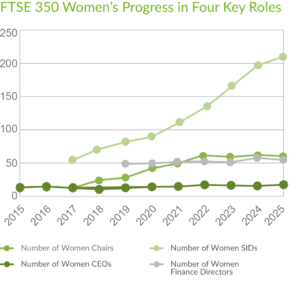
It is clear more progress is needed, with women making up just 17% of Chairs, 8% of CEOs and 21% of Finance Directors. Despite these challenges, the Senior Independent Director role is now gender balanced, 61%. This indicates a strong pipeline for women progressing to Chair roles in the future. Undoubtedly the stand-out statistic amongst a sea of progress at every level and in the majority of roles, is the number of women CEOs. This was always going to be the toughest hill to climb but the focus must remain on increasing women’s representation in the broader leadership landscape as this is where our future CEOs, FDs and other influential business leaders will emerge.
50 Largest Private Companies
In the fourth year of reporting on the UK’s 50 Largest Private Companies, it is clear many have been actively addressing gender balance for some time as evidenced by their willingness to participate and visible progress. There has been a welcome increase in the representation of women in Leadership, rising to 37%, and continuing to keep pace with their public-listed peers. However there remains greater divergence in progress at Board level, with more polarisation.
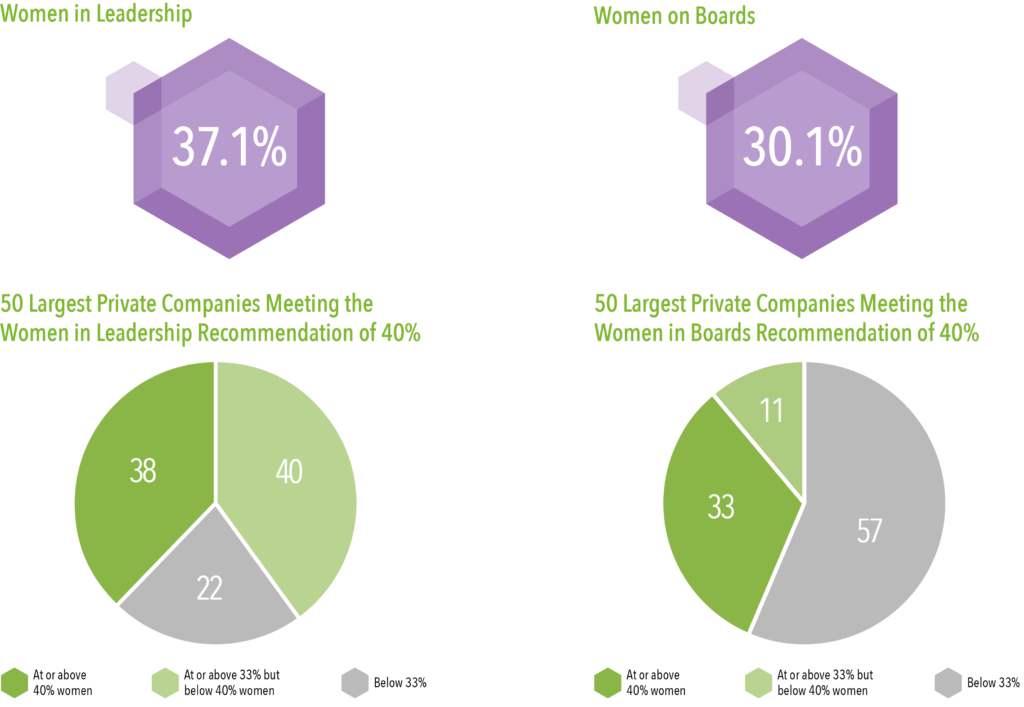
The number of women in the four key roles is encouraging; women make up 23.3% of CEOs and 23.3% of CFOs. Undoubtly there is more to do, but the influence of the push for gender balance in public-listed companies, coupled with changing societal and business norms, has clearly played a role in bringing about change. For the full list of the 50 Largest Private Companies included in scope, click here.
Percentages in charts may not sum to 100% due to rounding.